Youth's Lives Every Day
An estimated 3 to 5 million LGBTQ+ people in the United States have disabilities. It would be wrong, then, to assume that someone’s disability could dictate their gender or sexuality. Still, as we enter Developmental Disability Awareness Month, we encounter a lot of stigma and misinformation surrounding LGBTQ+ young people who have a disability (or more).
First, let’s talk about what a disability is. A disability can be defined as a physical, mental, cognitive, or developmental condition that impairs, interferes with, or limits a person’s ability to engage in certain tasks or participate in typical daily activities and interactions. But even this definition is limited — people can (and often do) have any number of combinations of these types of disabilities. People can be born with a disability or become disabled at any point in their lives. Some disabilities are visible, and some you can’t see right away.
Developmental disabilities specifically are a diverse group of chronic conditions including autism, Down syndrome, cerebral palsy, and attention deficit hyperactivity disorder. Even though having a disability is so common, we know that LGBTQ+ young people with disabilities face a lot of barriers to comfort and care, something their non-disabled peers don’t have to deal with.
For instance, LGBTQ+ youth who were diagnosed with autism had over 50% greater odds of attempting suicide in the past year compared to those who had never been diagnosed with autism. Autistic LGBTQ adults also report higher levels of barriers to healthcare, unmet healthcare needs, self-reported mental illness, and are more likely to be refused services by a medical provider than their allistic (non-autistic) peers.
The research illustrates a clear disparity in services and access for LGBTQ+ young people with disabilities, where support can be given to improve conditions for our youth. It must be emphasized that LGBTQ+ young people with disabilities absolutely deserve the same caring treatment and respect that non-disabled people do.
It is not, and never has been, an easy time to have a disability. Because of the intersections of their identities, LGBTQ+ young people face distinct kinds of discrimination, and it can be even harder for them to find affirmation from parents, caregivers, and their peers. So, being there for LGBTQ+ young people with disabilities starts with understanding and acceptance, and it continues with brave allyship.
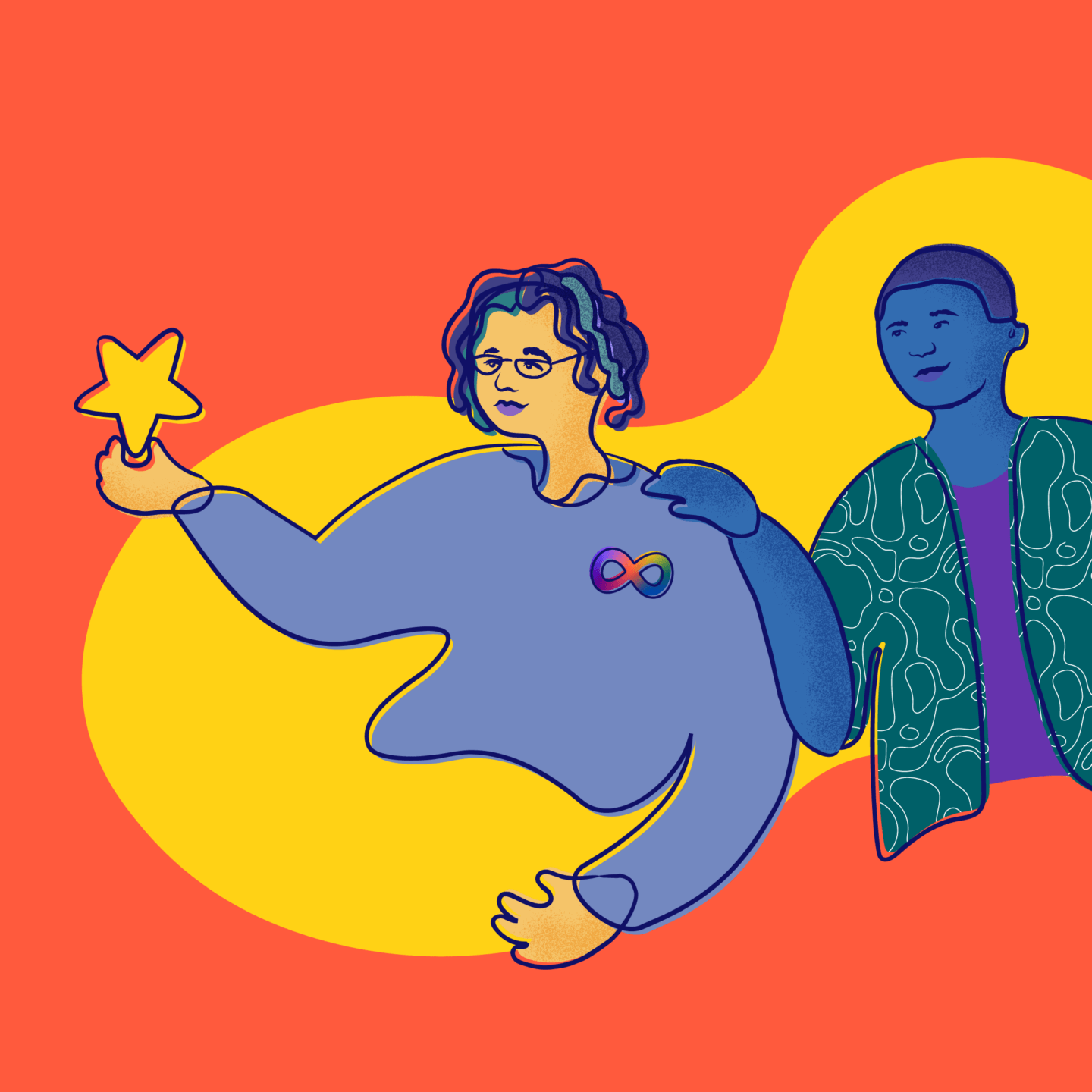
Allyship to LGBTQ+ young people with disabilities can start as simply as having an authentic conversation and learning about who a person is and what their needs are. Invite them to spaces for LGBTQ+ young people, and make sure those spaces are accessible to them. If they aren’t, do the work to make them accessible. When someone needs your help, do not shy away.
Sue Cardenas-Soto is a Copywriter at The Trevor Project, a suicide prevention and mental health organization for lesbian, gay, bisexual, transgender, queer & questioning (LGBTQ+) young people. If you or someone you know is feeling hopeless or suicidal, our trained crisis counselors are available 24/7 at 1-866-488-7386 via chat www.TheTrevorProject.org/Get-Help, or by texting START to 678-678.